


Free vs Paid AI Fashion Stylist Apps in 2026
TL;DR
• Free AI fashion stylist apps (e.g., StyleSnap) offer quick visual matching but do not personalize over time.
• Paid apps (e.g., GRWM, Fits) offer structured guidance and outfit refinement, suited to frequent shoppers.
• The Glance Intelligent Shopping Agent sits outside both categories: no subscription, no setup, learns from real browsing behavior.
• In 2026, the best tool is not the cheapest or the most expensive — it is the one that adapts to how you actually shop.
• This guide covers all three models with a U.S. budget and lifestyle lens.
Introduction: The Closet Problem Has Not Gone Away
Most U.S. shoppers do not struggle to find clothes. They struggle to choose. By 2026, the average American encounters hundreds of fashion options per week across apps, social feeds, and retail sites — and still ends up with items that do not quite work together.
That is the gap that AI fashion stylist apps were built to close. These tools use artificial intelligence to suggest outfits, analyze preferences, and reduce the cognitive load of getting dressed or shopping with confidence.
But not all AI fashion tools solve the same problem. Some are free and fast. Others charge monthly for deeper personalization. And some, like the Glance Intelligent Shopping Agent, operate on a fundamentally different model — learning from behavior rather than asking you to define your style upfront.
This guide compares free vs paid AI fashion stylist app options available to U.S. shoppers in 2026, using real-world examples to help you decide what actually fits your needs — and your budget.
What Is an AI Fashion Stylist App?
An AI fashion stylist app uses machine learning or behavioral analysis to help users make faster, more confident clothing decisions. Depending on the platform, these tools can:
• Identify visually similar items from an uploaded photo
• Suggest complete outfits based on stated preferences or past behavior
• Refine a look already in progress
• Learn browsing patterns to improve recommendations over time
In simple terms, these apps try to answer questions like:
- “Does this go together?”
- “What should I wear today?”
- “What styles fit my vibe without endless scrolling?”
In 2026, these tools span a wide range of sophistication. Some are essentially reverse image search tools with fashion labels. Others are full behavioral systems that operate quietly in the background of your shopping activity.
The distinction matters when you are choosing one.
Free AI Fashion Stylist Apps: StyleSnap and Similar Tools
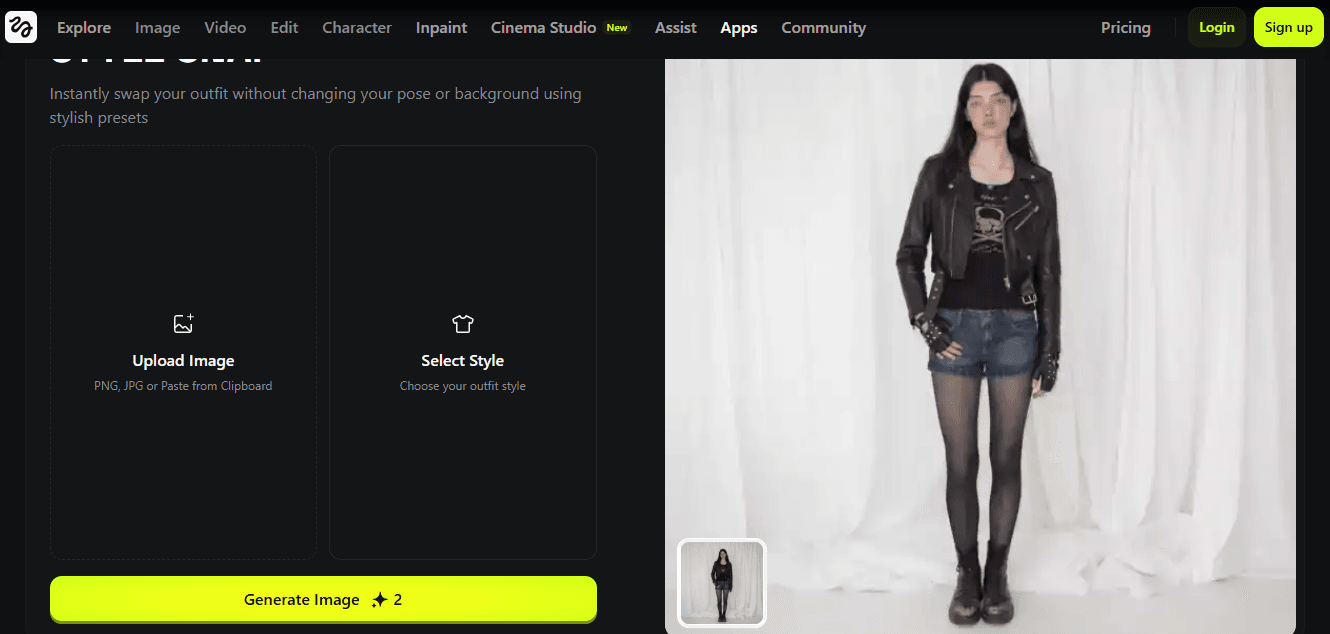
Free AI fashion stylist apps typically require no account creation, no payment, and no onboarding. StyleSnap, Amazon's visual search tool, is one of the most widely used examples in the U.S. market.
Free tools generally excel at:
• Visual item matching from uploaded photos
• Instant outfit inspiration with no setup
• Low-friction discovery for casual browsers
• Surfacing similar items across retailers
For U.S. shoppers who browse occasionally or want a fast answer — 'Where can I find that jacket?' — free tools deliver immediate value.
Where Free Apps Fall Short
Free AI fashion tools are built for single-session utility. They typically do not:
• Retain memory of your preferences across sessions
• Account for body type, lifestyle, occasion, or budget
• Learn from hesitation or repeated browsing patterns
• Explain why a combination works or does not work
StyleSnap, for example, answers 'What looks like this?' — not 'What suits you based on how you dress?' That distinction defines the ceiling of free tools in 2026.
According to a McKinsey study on consumer decision-making, choice overload is one of the primary drivers of cart abandonment in online fashion. Free tools address discovery but rarely address the confidence gap that leads to returns.
Paid AI Fashion Stylist Apps: Structure, Personalization, and Cost

Paid AI fashion stylist apps typically move beyond visual matching into guided decision-making. Two well-known examples in the U.S. market represent different approaches: Fits and GRWM.
For U.S. shoppers willing to pay, these tools are less about discovery and more about confidence.
Full Outfit Assembly: The Fits Approach
Apps like Fits aim to eliminate the 'what do I wear?' question entirely. They rely on:
• Detailed onboarding (body type, color preferences, lifestyle)
• Occasion-based outfit generation
• Curated selections from brand partners
This model works well for shoppers who want clear, complete answers and do not mind the upfront investment of setting up a profile. The limitation is rigidity: if your taste shifts, the system is slow to catch up.
Competitor analysis of top-ranking content in this space shows that return rate reduction is a leading value proposition of paid tools. A 2025 National Retail Federation report indicated that AI-assisted fit and style recommendations reduced return rates for participating retailers by up to 22 percent — a meaningful figure for U.S. shoppers spending $150 or more per purchase.
Outfit Refinement: The GRWM Approach
GRWM (Get Ready With Me) takes a lighter approach. Rather than assembling outfits from scratch, it works as a real-time confidence check.
The workflow is simple: take a selfie of what you are already wearing, and the app suggests small upgrades — a different accessory, a shoe swap, a layer adjustment. The result is practical and low-pressure.
Why this resonates with U.S. users:
• It works in the moment, not during abstract planning sessions
• It refines rather than replaces your existing choices
• It reduces last-minute doubt without requiring a full style overhaul
GRWM is not a comprehensive AI personal stylist. It does not plan wardrobes, track body type changes, or build long-term preference profiles. As a paid AI fashion stylist app, it is best understood as a finishing tool — valuable in a specific window of the getting-dressed experience.
Together, Fits and GRWM illustrate the two dominant paid models: one decides for you, the other helps you feel better about what you have already decided.
Where the Glance Intelligent Shopping Agent Fits
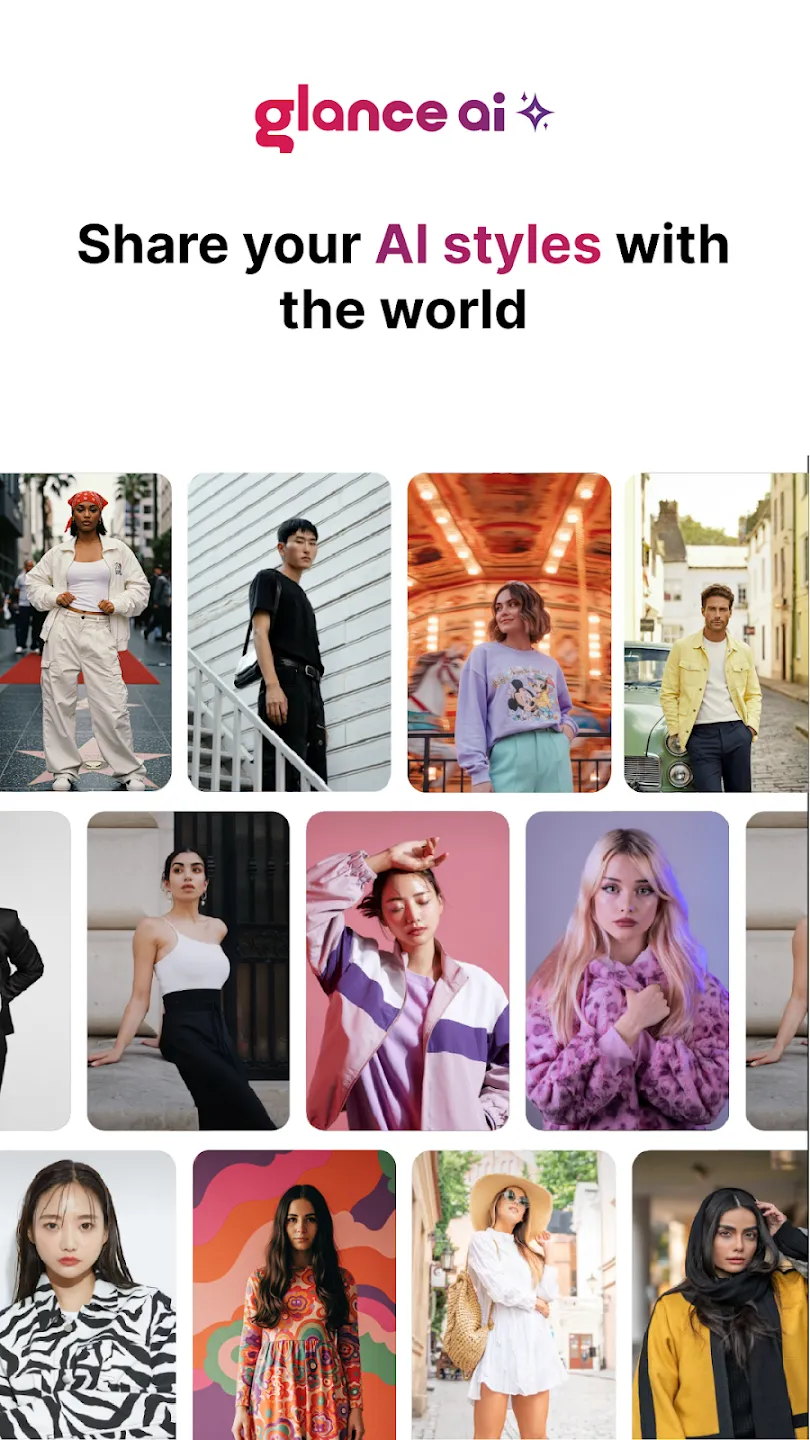
The Glance Intelligent Shopping Agent is not a traditional AI fashion stylist app. It does not ask users to fill out style quizzes, pay monthly fees, or build a manual profile. Instead, it operates through behavioral intelligence — learning from how users actually engage with content.
How Behavioral Intelligence Works
The Glance Intelligent Shopping Agent observes:
• Which styles a user pauses on during browsing
• Which items are skipped or ignored
• Dwell time and repeat engagement with specific looks
• Patterns that emerge across multiple browsing sessions
Rather than asking users to declare their style preferences, it infers them from real behavior. The result is a fashion discovery experience that adapts gradually — and quietly — without requiring ongoing manual input.
Why This Model Matters for U.S. Shoppers in 2026
Three factors make behavioral intelligence particularly relevant to the current U.S. market:
• Subscription fatigue: U.S. consumers are increasingly resistant to adding paid app subscriptions. A tool that delivers improving personalization without a recurring charge removes a key barrier.
• Style fluidity: Fashion preferences shift with seasons, trends, and life events. Systems that rely on static onboarding profiles struggle to keep pace. Behavioral learning adapts in real time.
• Effort intolerance: Research from Baymard Institute on UX in e-commerce consistently shows that onboarding friction reduces completion rates. The Glance Intelligent Shopping Agent requires no onboarding — it starts working from the first interaction.
In the free vs paid framework, the Glance Intelligent Shopping Agent occupies a distinct third position: no cost, no setup, and personalization that improves with use.
Comparing Free vs Paid AI Fashion Stylist Apps (2026)
The table below compares the three primary models available to U.S. shoppers in 2026.
| Criteria | Free Tools (e.g., StyleSnap) | Paid Apps (e.g., GRWM, Fits) | Glance Intelligent Shopping Agent |
| Cost | Free | Subscription or in-app purchase | No cost to users |
| How It Works | Visual matching from uploaded images | Outfit refinement or assembly via prompts and selfies | Behavioral inference from browsing patterns |
| Personalization Level | Low — resets each session | Medium — improves with repeated use | Gradual — evolves naturally over time |
| Setup Required | None | Moderate (onboarding, profile setup) | None — no quizzes or forms |
| Output Type | Similar items or look-alike products | Full outfits or refinement suggestions | Curated discovery based on observed taste |
| Accuracy Over Time | Does not improve | Improves with continued input | Improves passively through behavior |
| Return Rate Impact | Minimal | Can reduce returns for frequent shoppers | Reduces choice overload at discovery stage |
| Best For | Quick inspiration, casual browsing | Frequent shoppers want structured guidance | Shoppers who want smart discovery without setup or cost |
Which AI Fashion Stylist App Is Right for You?
There’s no single “best” ai fashion stylist app—only what fits your needs.
Choose a free tool if:
- You shop occasionally and want quick visual inspiration
- You do not need long-term personalization
- You are experimenting with a specific item or look
Choose a paid app if:
- You shop frequently and want consistent outfit guidance
- You struggle with decision fatigue at the point of checkout
- You want a structured system that improves with repeated use
- Reducing returns is a priority
Consider the Glance Intelligent Shopping Agent if:
- You dislike subscriptions or onboarding flows
- Your style preferences shift often and resist rigid categorization
- You want a tool that adapts to real behavior rather than stated preferences
- You browse frequently but want discovery to feel less like work
What the Best AI Fashion Tools Have in Common in 2026
- Across free, paid, and behavioral platforms, the most effective AI fashion stylist apps in 2026 share four traits:
- Low friction: They do not ask users to work hard to receive value.
- Contextual relevance: Suggestions reflect real-world variables — occasion, season, budget — not just aesthetic preference.
- Adaptive accuracy: The tool improves the more it is used, without requiring manual updates from the user.
- Transparency: Users understand, at least broadly, why a suggestion is being made.
- Tools that score well on all four criteria tend to reduce purchase regret and increase long-term engagement — two metrics that matter equally to shoppers and retailers.
- The gap in the market, and what the next generation of AI fashion tools is moving toward, is body-type inclusivity. Most current tools, including free and paid apps, are calibrated on a narrow range of body types. As AI training data becomes more representative, this is expected to improve significantly by late 2026 — a space worth watching.
Tips for Getting More Value From Any AI Fashion Tool
• Use more than one session before judging a tool — behavioral tools in particular require time
to calibrate.
• Notice what you engage with, not just what you buy. AI tools that track dwell time and scroll
behavior give a more accurate picture of your preferences than purchase history alone.
• Avoid apps that lock you into a fixed style label. Fashion preferences evolve; tools should
evolve with them.
• Combine tools if needed. A free visual tool for quick searches plus a behavioral platform for ongoing discovery is a practical and cost-effective stack.
• Pay attention to return rates over time. A tool that reduces returns more than its subscription cost charges is net-positive, regardless of price tier.
Conclusion: Free or Paid—It’s About Fit, Not Price
In 2026, the decision between free and paid AI fashion stylist apps is less about budget and more about how you want to be understood.
Free tools like StyleSnap are fast and frictionless — useful for quick visual inspiration and one-time searches. Paid apps like GRWM and Fits offer structure and confidence, suited to shoppers who want guidance woven into their routine. The Glance Intelligent Shopping Agent represents a third approach: no cost, no onboarding, and personalization that improves through behavioral observation rather than stated preferences.
For U.S. shoppers navigating an increasingly saturated fashion landscape in 2026, the best tool is not the cheapest or the most feature-rich. It is the one that gets out of the way while still helping you shop smarter.
FAQs Related to AI Fashion Stylist Apps
What is an AI fashion stylist app?
An AI fashion stylist app uses artificial intelligence to suggest outfits, analyze personal style, and simplify clothing decisions. Tools range from free visual-matching apps like StyleSnap to subscription-based platforms and behavior-led systems like the Glance Intelligent Shopping Agent, which learns from how users browse rather than from quizzes or profiles.
Are free AI fashion stylist apps worth using?
Free AI fashion stylist apps are useful for quick inspiration and visual matching — for example, uploading a photo to find similar items. However, they rarely personalize over time or adapt to evolving tastes. They work best as a starting point, not a long-term styling solution.
What do paid AI stylist apps offer that free ones do not?
Paid AI stylist apps typically offer deeper personalization, occasion-based outfit assembly, and feedback loops that improve with repeated use. They reduce decision fatigue for frequent shoppers and minimize returns by providing structured, context-aware recommendations rather than one-off visual suggestions.
Is the Glance Intelligent Shopping Agent free?
Yes. The Glance Intelligent Shopping Agent does not charge users a subscription or require manual setup. It works by observing browsing behavior — what users pause on, engage with, or skip — to refine fashion discovery over time without quizzes, profiles, or payment.
Which AI fashion tool is best for U.S. shoppers in 2026?
The best tool depends on usage patterns. Free tools suit casual browsers. Paid apps like GRWM or Fits suit frequent shoppers who want structured guidance. Behavior-led platforms like the Glance Intelligent Shopping Agent suit users who want smarter discovery without subscriptions or manual input.
Download the Glance app now




Your intelligent
shopping agent.







Your intelligent
shopping agent.